
The Taj Mahal
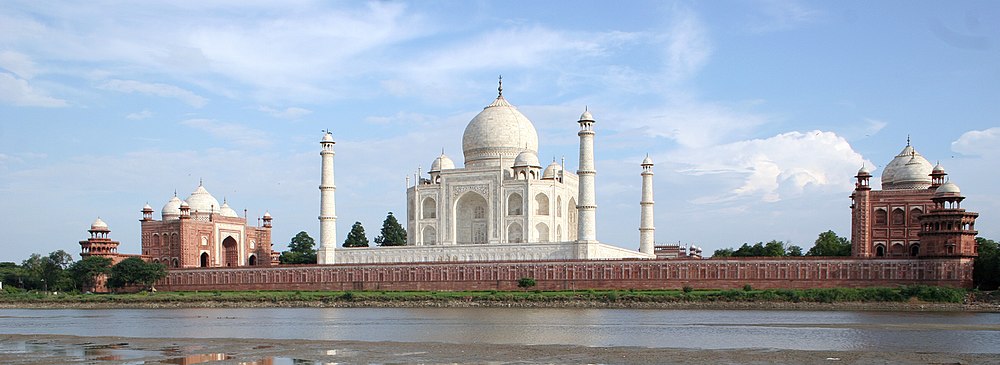
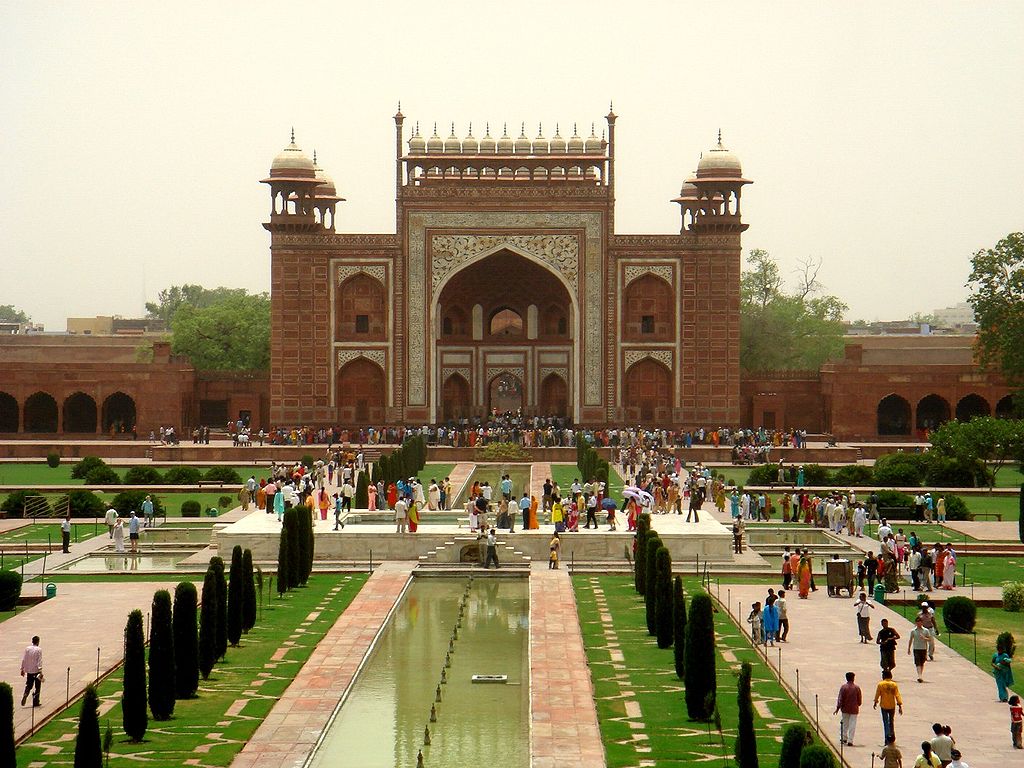
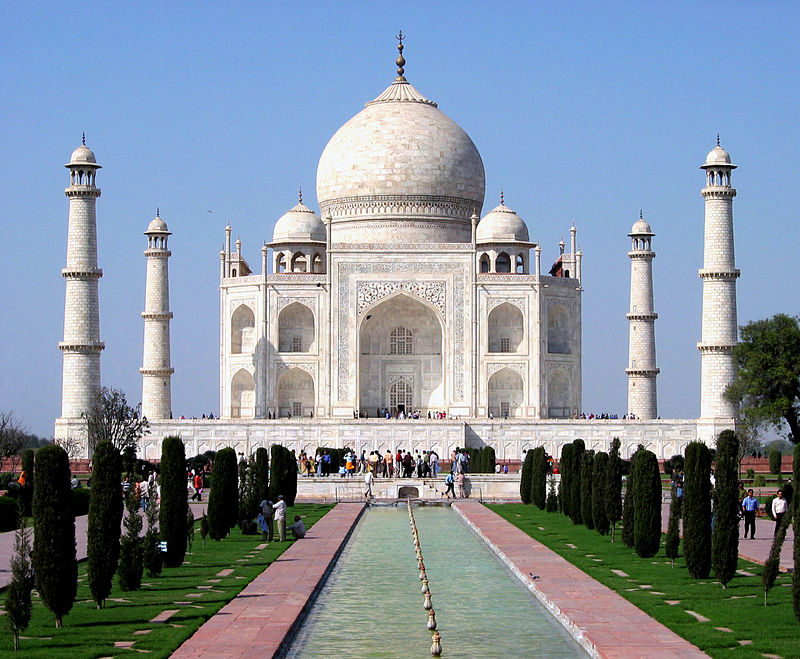
The Taj Mahal (meaning Crown of the Palace) is an ivory-white marble mausoleum on the south bank of the Yamuna river in the Indian city of Agra. It was commissioned in 1632 by the Mughal emperor, Shah Jahan (reigned from 1628 to 1658), to house the tomb of his favourite wife, Mumtaz Mahal. The tomb is the centrepiece of a 42-acre complex, which includes a mosque and a guest house, and is set in formal gardens bounded on three sides by a crenellated wall.
Construction of the mausoleum was essentially completed in 1643 but work continued on other phases of the project for another 10 years. The Taj Mahal complex is believed to have been completed in its entirety in 1653 at a cost estimated at the time to be around 32 million rupees, which in 2015, would be approximately 52.8 billion rupees (U.S. $827 million). The construction project employed some 20,000 artisans under the guidance of a board of architects led by the court architect to the emperor, Ustad Ahmad Lahauri.
The Taj Mahal was designated as a UNESCO World Heritage Site in 1983 for being “the jewel of Muslim art in India and one of the universally admired masterpieces of the world’s heritage”. It is regarded by many as the best example of Mughal architecture and a symbol of India’s rich history. The Taj Mahal attracts 7–8 million visitors a year. In 2007, it was declared a winner of the New 7 Wonders of the World (2000–2007) initiative.
Inspiration
The Taj Mahal was commissioned by Shah Jahan in 1631, to be built in the memory of his wife Mumtaz Mahal, a Persian princess who died giving birth to their 14th child, Gauhara Begum. Construction of the Taj Mahal began in 1632. The imperial court documenting Shah Jahan’s grief after the death of Mumtaz Mahal illustrate the love story held as the inspiration for Taj Mahal. The principal mausoleum was completed in 1643 and the surrounding buildings and garden were finished about five years later.
Architecture and design
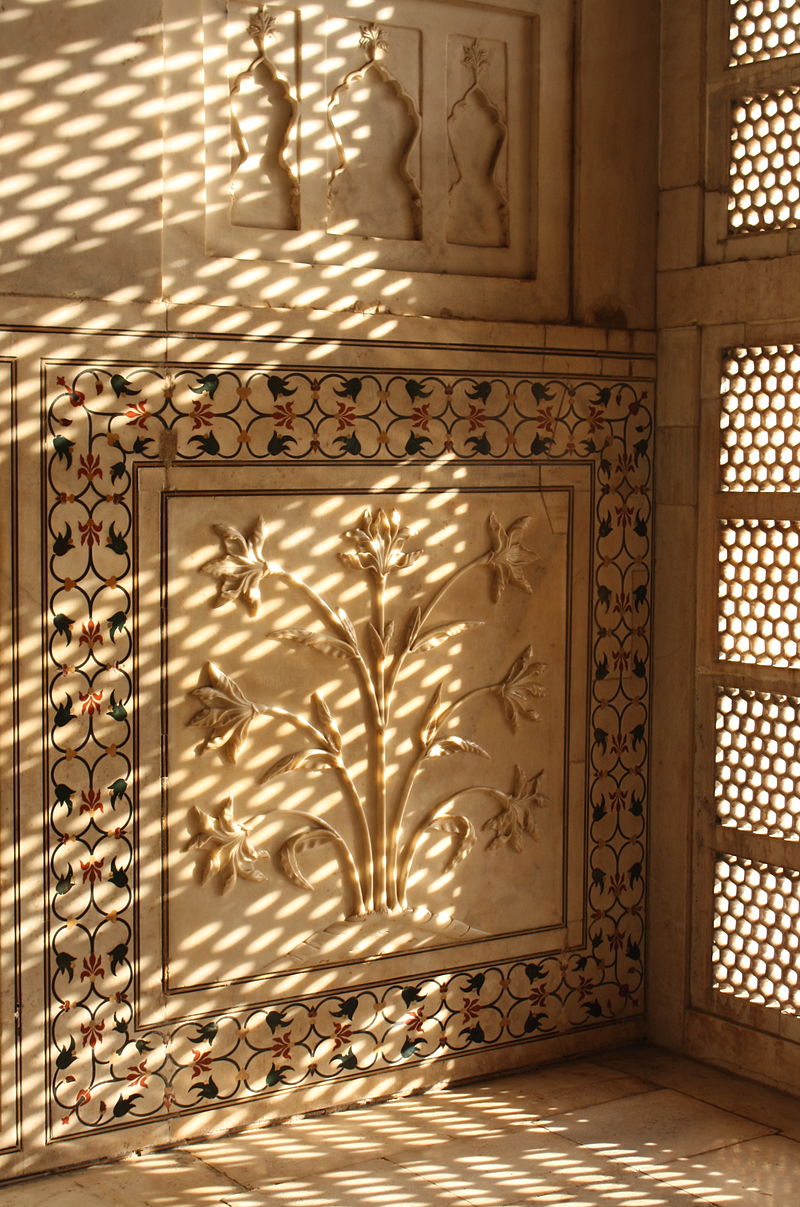
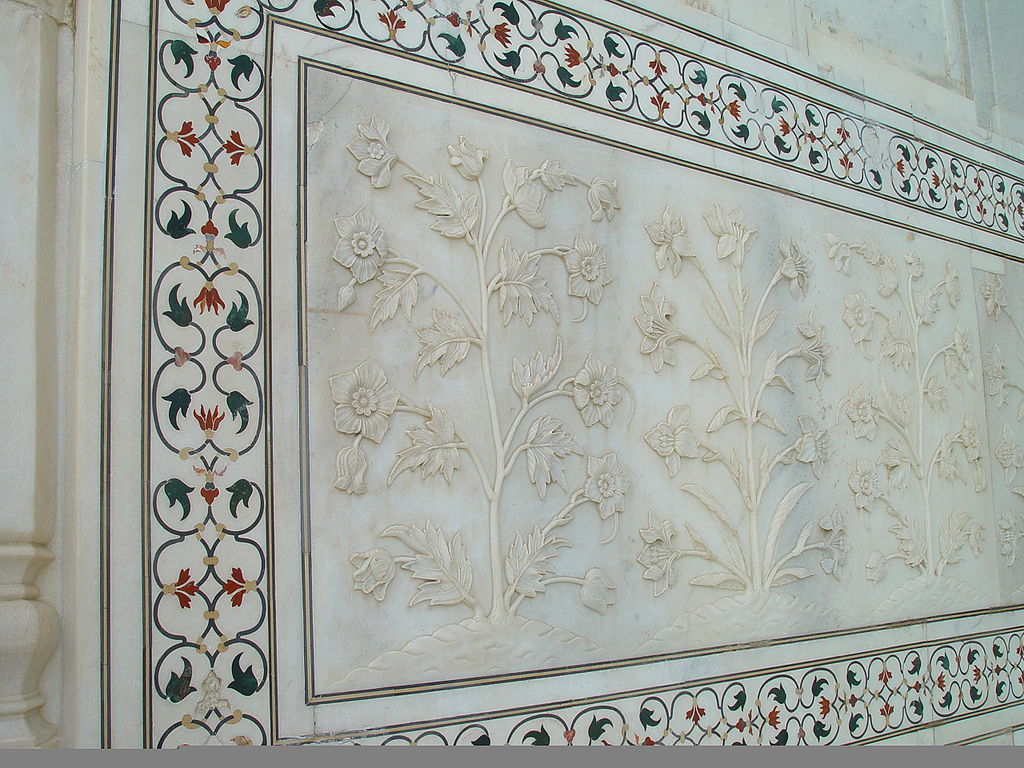
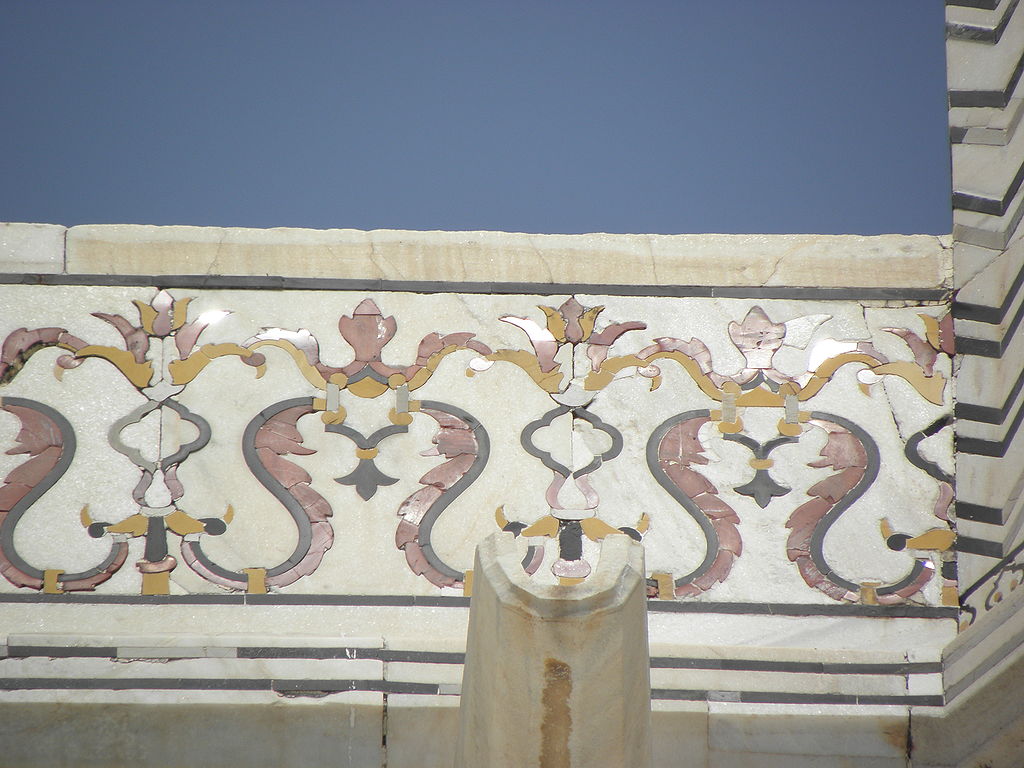
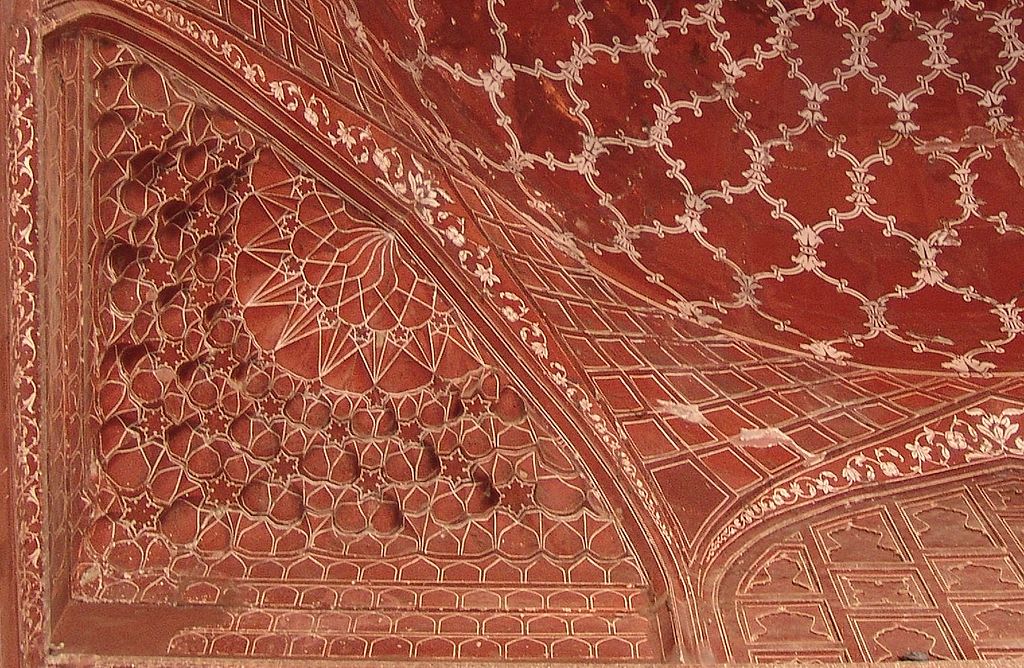
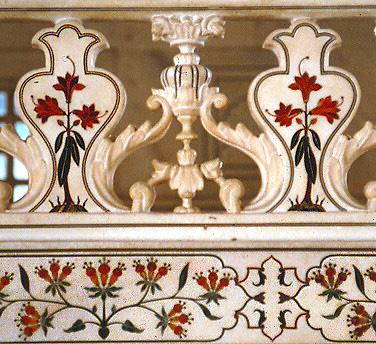
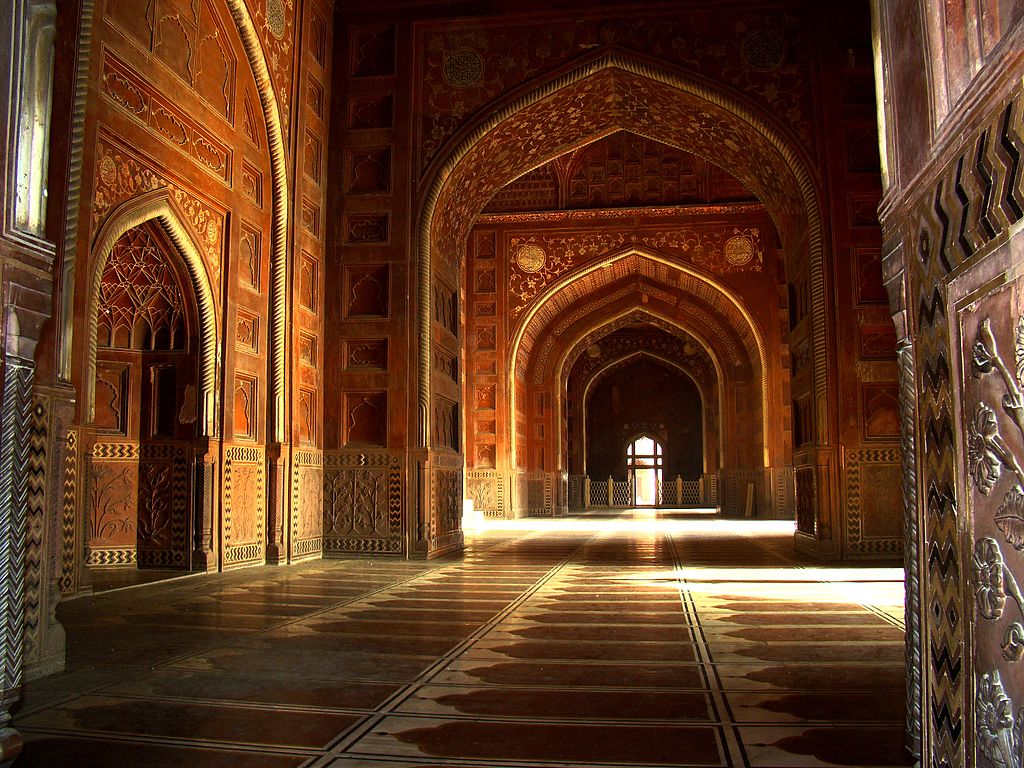
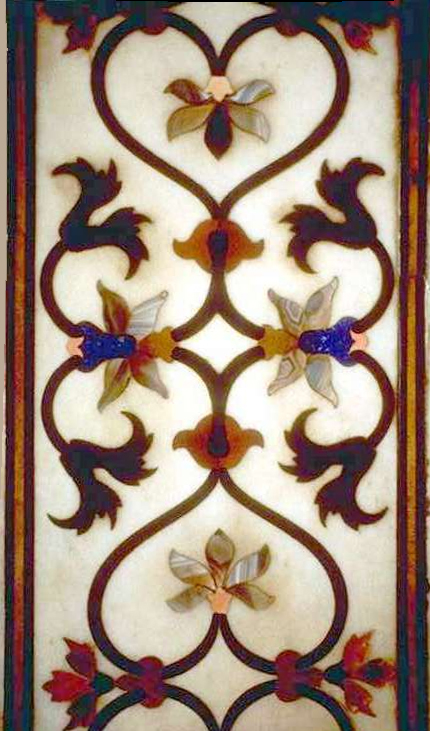
The Taj Mahal incorporates and expands on design traditions of Persian and earlier Mughal architecture. Specific inspiration came from successful Timurid and Mughal buildings including the Gur-e Amir (the tomb of Timur, progenitor of the Mughal dynasty, in Samarkand), Humayun’s Tomb, Itmad-Ud-Daulah’s Tomb (sometimes called the Baby Taj), and Shah Jahan’s own Jama Masjid in Delhi. While earlier Mughal buildings were primarily constructed of red sandstone, Shah Jahan promoted the use of white marble inlaid with
semi-precious stones. Buildings under his patronage reached new levels of refinement.
Tomb
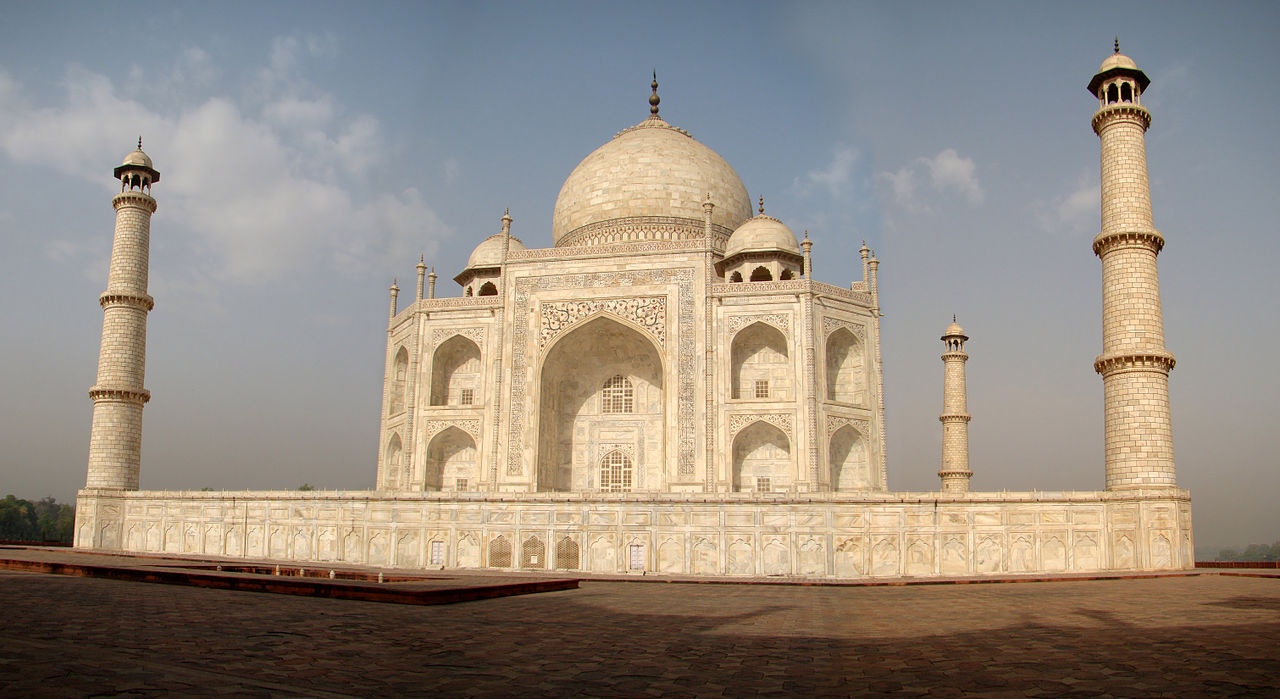
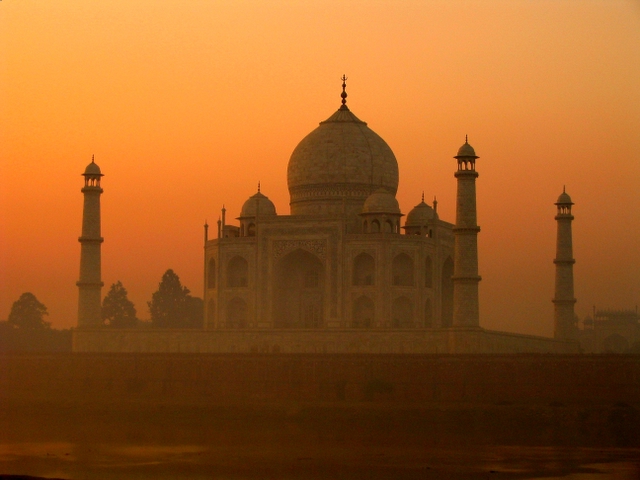
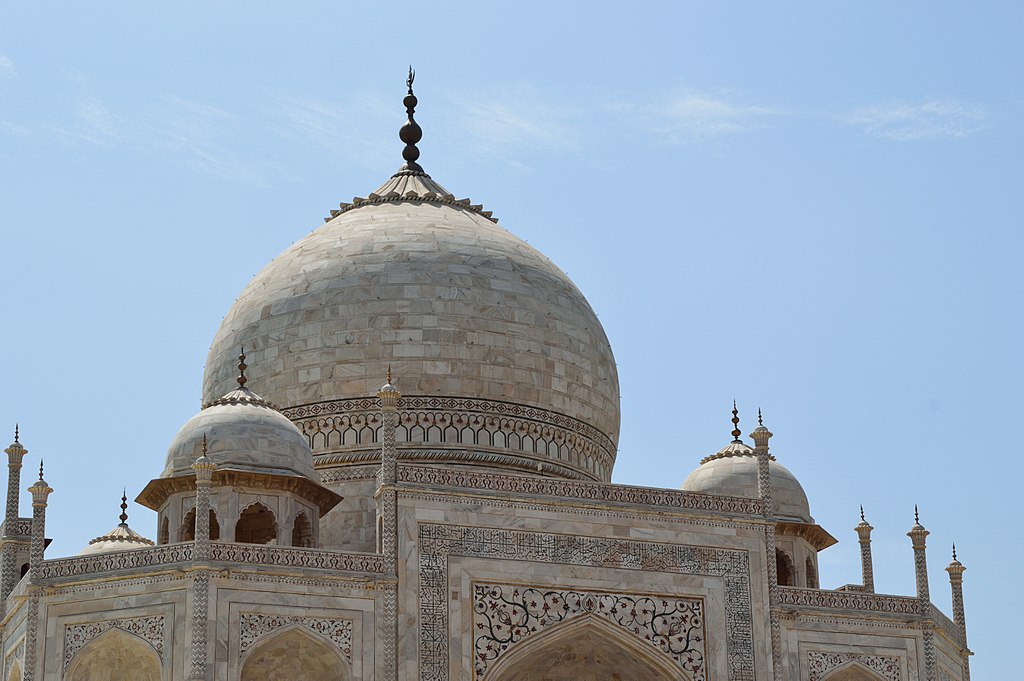
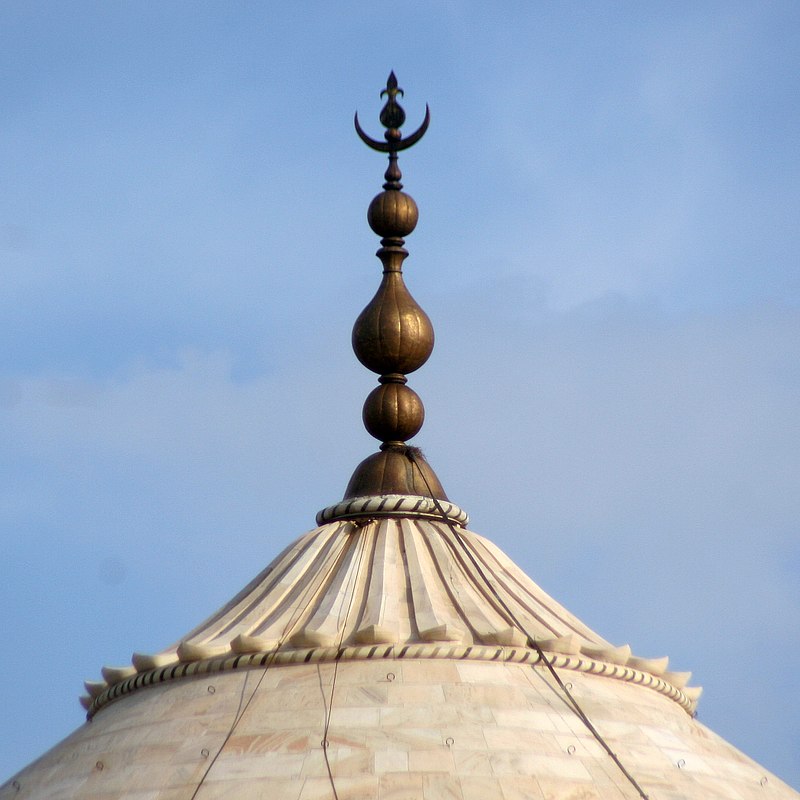
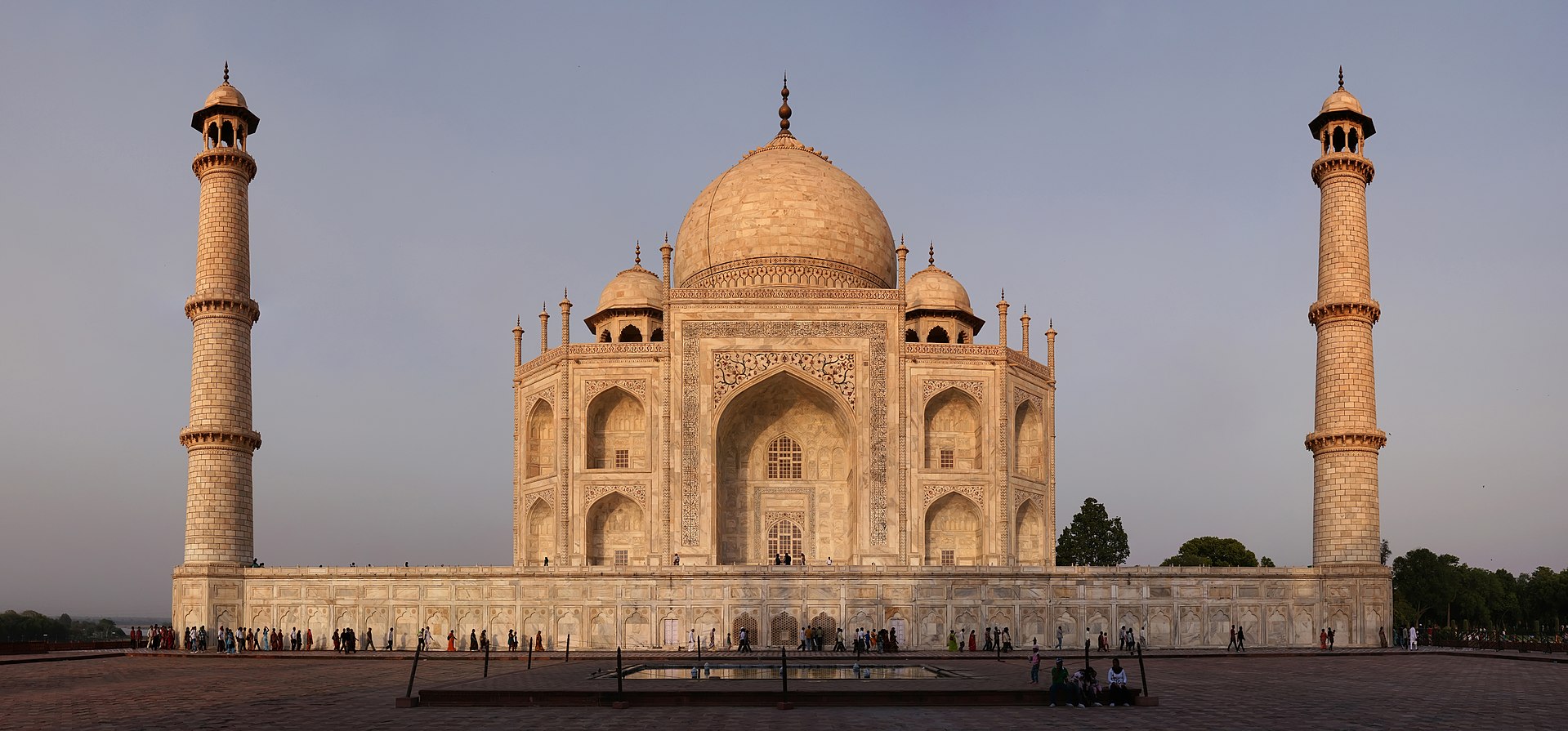
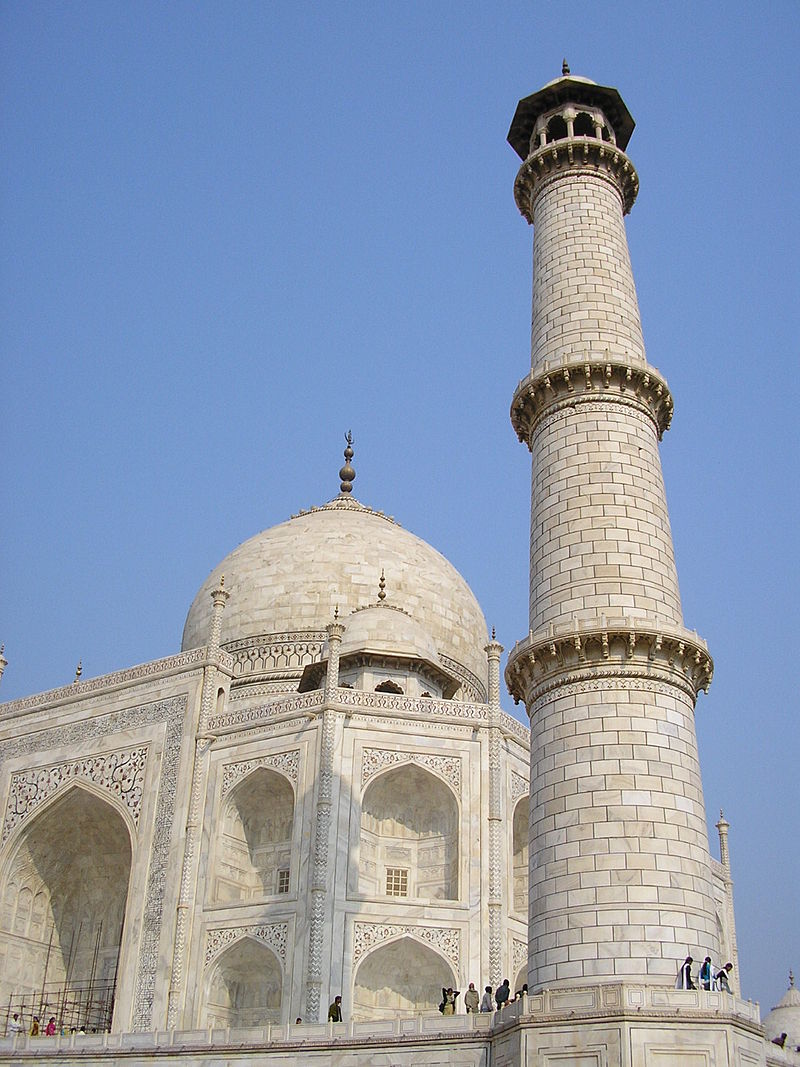
The tomb is the central focus of the entire complex of the Taj Mahal. It is a large, white marble structure standing on a square plinth and consists of a symmetrical building with an iwan (an arch-shaped doorway) topped by a large dome and finial. Like most Mughal tombs, the basic elements are Persian in origin.
The base structure is a large multi-chambered cube with chamfered corners forming an unequal eight-sided structure that is approximately 180 ft on each of the four long sides.
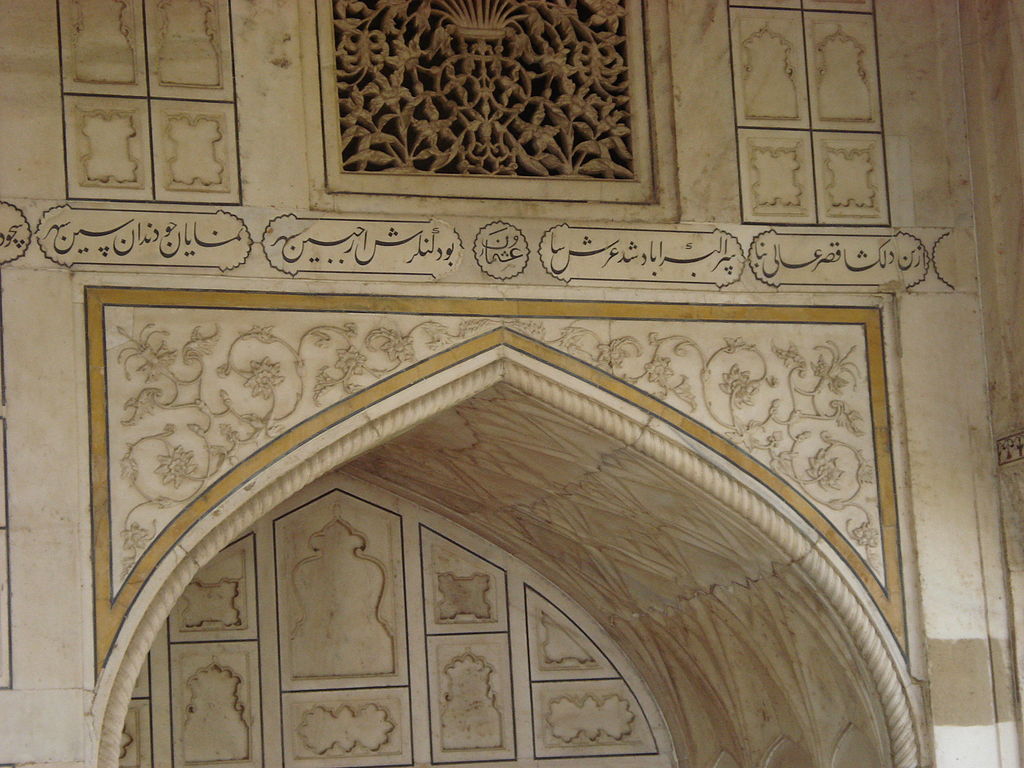
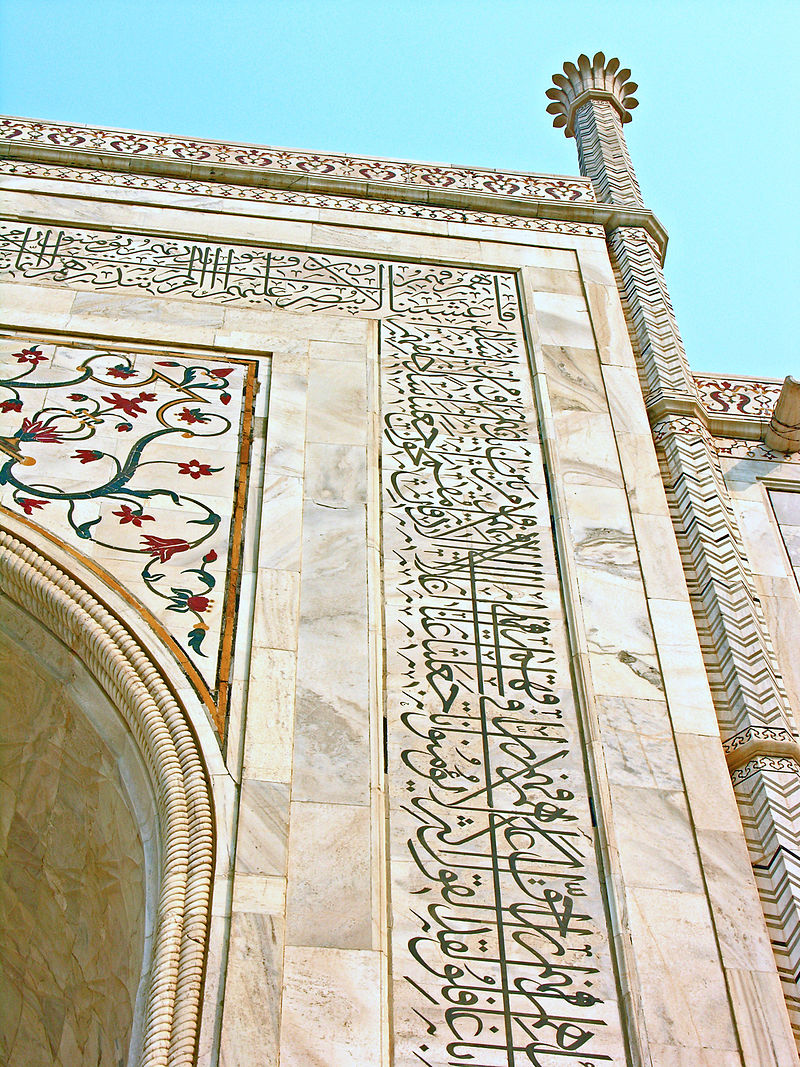
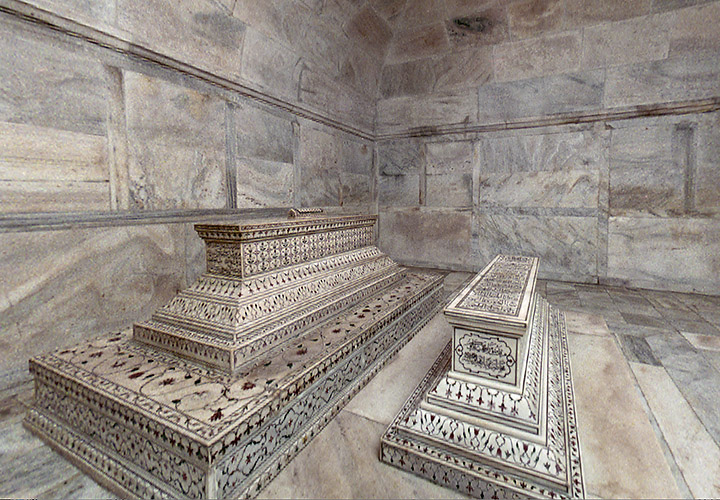
Each side of the iwan is framed with a huge pishtaq or vaulted archway with two similarly shaped arched balconies stacked on either side. This motif of stacked pishtaqs is replicated on the chamfered corner areas, making the design completely symmetrical on all sides of the building. Four minarets frame the tomb, one at each corner of the plinth facing the chamfered corners. The main chamber houses the false sarcophagi of Mumtaz Mahal and Shah Jahan; the actual graves are at a lower level.
Myths
Ever since its construction, the building has been the source of an admiration transcending culture and geography, and so personal and emotional responses have consistently eclipsed scholastic appraisals of the monument.
A longstanding myth holds that Shah Jahan planned a mausoleum to be built in black marble as a Black Taj Mahal across the Yamuna river. The idea originates from fanciful writings of Jean-Baptiste Tavernier, a European traveller who visited Agra in 1665. It was suggested that Shah Jahan was overthrown by his son Aurangzeb before it could be built. Ruins of blackened marble across the river in Moonlight Garden, Mahtab Bagh, seemed to support this legend.
However, excavations carried out in the 1990s found that they were discoloured white stones that had turned black. A more credible theory for the origins of the black mausoleum was demonstrated in 2006 by archaeologists who reconstructed part of the pool in the Moonlight Garden. A dark reflection of the white mausoleum could clearly be seen, befitting Shah Jahan’s obsession with symmetry and the positioning of the pool itself.
No evidence exists for claims that describe, often in horrific detail, the deaths, dismemberments and mutilations which Shah Jahan supposedly inflicted on various architects and craftsmen associated with the tomb. Some stories claim that those involved in construction signed contracts committing themselves to have no part in any similar design. Similar claims are made for many famous buildings. No evidence exists for claims that Lord William Bentinck, governor-general of India in the 1830s, supposedly planned to demolish the Taj Mahal and auction off the marble. Bentinck’s biographer John Rosselli says that the story arose from Bentinck’s fund-raising sale of discarded marble from Agra Fort.
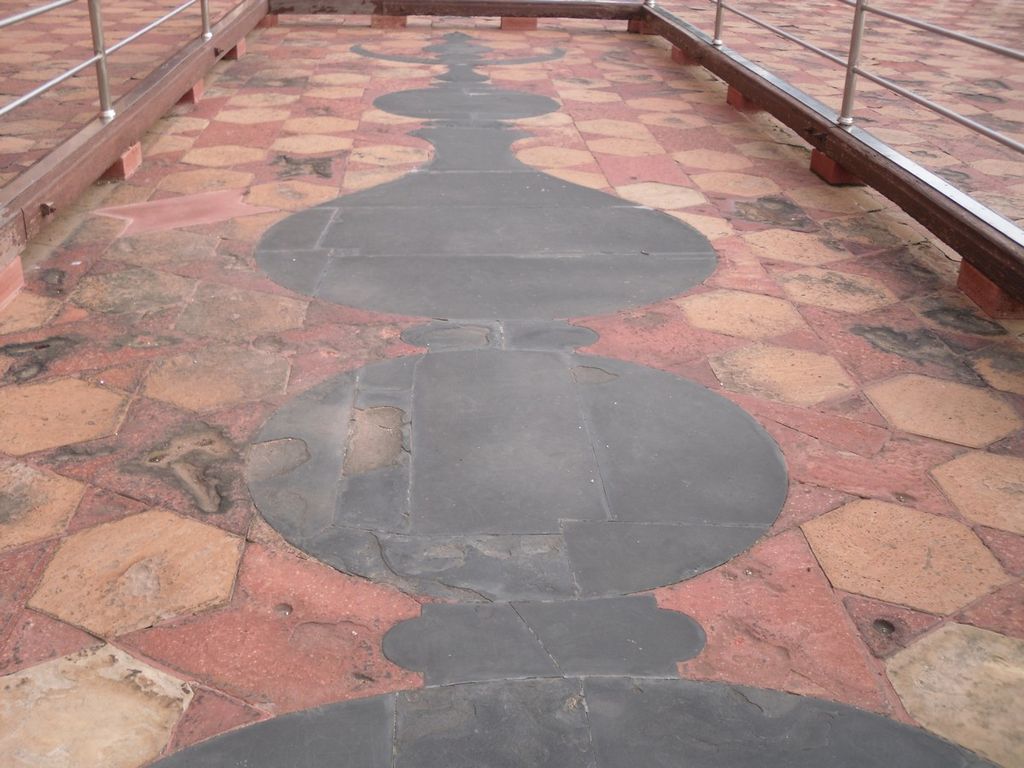
Another myth suggests that beating the silhouette of the finial will cause water to come forth. To this day, officials find broken bangles surrounding the silhouette.
In 2000, India’s Supreme Court dismissed P. N. Oak’s petition to declare that a Hindu king built the Taj Mahal. In 2005 a similar petition was dismissed by the Allahabad High Court. This case was brought by Amar Nath Mishra, a social worker and preacher who says that the Taj Mahal was built by the Hindu King Parmar Dev in 1196.
As of 2017, several court cases about Taj Mahal being a Hindu temple have been inspired by Oak’s theory. In August 2017, Archaeological Survey of India (ASI) stated there was no evidence to suggest the monument ever housed a temple.
A theory that the Taj Mahal was designed by an Italian, Geronimo Vereneo, held sway for a brief period after it was first promoted by Henry George Keene in 1879 who went by a translation of a Spanish work Itinerario, (The Travels of Fray Sebastian Manrique, 1629-1643). Another theory that a Frenchman, Austin of Bordeaux designed the Taj was promoted by William Henry Sleeman based on the work of Jean-Baptiste Tavernier. These ideas were revived by Father Hosten and discussed again by E.B. Havell and served as the basis for subsequent theories and controversies.